Thomas E. Robinson died in Sandy, Utah, on July 12, 2001, at 95. His funeral was held July 16 at the Monument Park Stake Center, and he was buried beside Virginia at Wasatch Lawn Memorial Park.
Before a vaccine, polio frightened every parent. Tom developed his own treatment. His first case was a 10-year-old boy with spasms in his back and arms and trouble swallowing. Tom gave him sucrose every day and limited his fluids to three glasses a day, and the symptoms went away.
On April 30, 1936, the new Sugar House Rotary Club held its first official meeting at the Odd Fellows Hall, 2040½ South 1100 East. Dr. Thomas E. Robinson was one of its 22 charter members, and all 22 came.
In 1932 Tom opened the first family medical practice in Sugar House, in an office above the old Granite Furniture store on 2100 South. He later moved to 2009 South 1100 East and practiced there for the rest of his career.
On September 4, 1907, Hilda Robinson gave birth to her last child, a daughter also named Hilda. Three days later, on September 7, Hilda the mother died. Tom was not yet two.
Thomas Erickson Robinson was born on October 26, 1905, in Freedom, a small farm town on the Wyoming–Idaho line in Star Valley. He was the 12th of 13 children of John Robinson Jr. and Hilda Ulrika Erickson.
How a Star Valley farm boy became Salt Lake City’s neighborhood doctor, and what his life says about caring for families when money is tight.
Thomas Erickson Robinson was born on October 26, 1905, in Freedom, a farm town on the Wyoming–Idaho line in Star Valley. He was the 12th of 13 children. His father, John Robinson Jr., was born in Willard, Utah, to English immigrants from Bury, Lancashire. His mother, Hilda Ulrika Erickson, was born in Julita, Sweden. The family came north from Richmond, Utah, and eventually owned about 2,000 acres around Freedom.
Loss came early. His mother died in September 1907, three days after giving birth to his little sister. Tom was not yet two. He finished high school in Preston, Idaho, married Virginia Jeremy Wright in 1928, and studied at the University of Utah, which then taught only the first two years of medicine. He finished his medical degree at the University of Pennsylvania in 1931.
A doctor families could afford
In 1932 he opened the first family practice in Sugar House, in an office above the old Granite Furniture store on 2100 South, and later moved to 2009 South 1100 East. He never booked appointments, so every patient got the time they needed. For years an office visit cost $2, and he often waived it when a family couldn’t pay. A home delivery, prenatal care included, was $35. For families who couldn’t afford a hospital, he removed tonsils on kitchen tables for $25 to $35. On a typical day he saw more than 50 patients, gave free physicals to Boy Scouts and missionaries, and delivered four or five babies a week.
His own answer to polio
Before the Salk vaccine, polio frightened every parent. Dr. Robinson developed his own treatment, built around sugar, limited fluids, hot baths and getting patients moving early. He used it on more than 50 patients over nine years, including one of his own daughters, and published his results in the journal Clinical Medicine in August 1949. His approach was controversial in its day. It is part of medical history, not advice for today.
Neighbor, leader, father of ten
He was one of 22 charter members of the Sugar House Rotary Club in 1936 and later its president. After World War II he helped build Utah’s society of general practitioners, became the first Utah president of the American Academy of General Practice, and chaired the American Medical Association’s general practice section. He served 13 years in his ward bishopric, where, worn out from late-night house calls, he was known to doze on the stand until a medical emergency called him away. His ten children spent many evenings waiting in the car while he made house calls.
He kept practicing until the end of 1995, retiring at 90. When he died in 2001, he left 10 children, 63 grandchildren and 164 great-grandchildren.

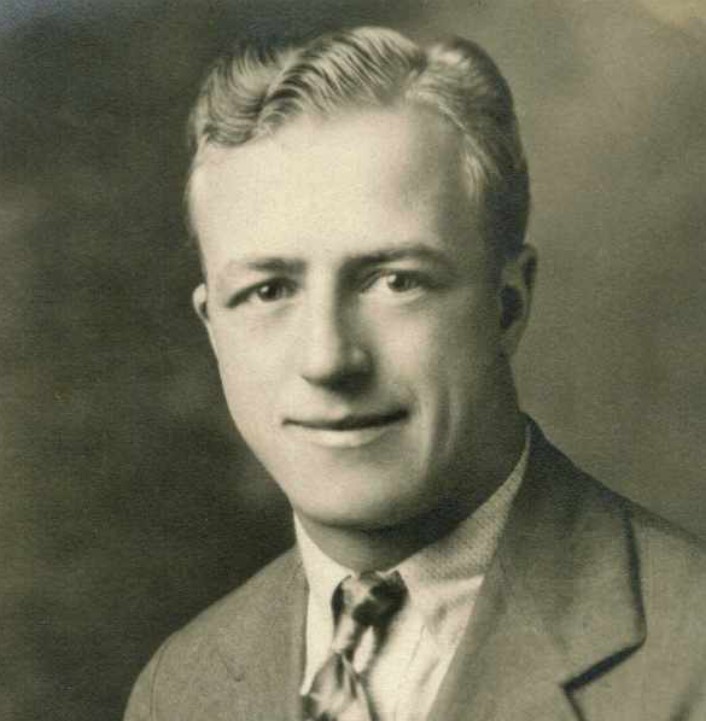 Dr. Thomas E. RobinsonFamily From his life · 2001